
Equity Crowdfunding Campaign Budget: Build a Raise-Ready Plan
The biggest equity crowdfunding campaign budget mistake is treating the raise target as the only number that matters. A campaign also needs a plan for setup, compliance, content, marketing, and the ongoing work of engaging potential investors.
It can be hard to decide where costs belong, especially when one-time preparation overlaps with spending that continues after launch. And marketing activity alone doesn’t show whether investors are paying attention. Build your budget backward from the raise plan, then review flexible spending as real engagement develops.
This guide will help you create a tailored budget with clear assumptions, separate upfront needs from ongoing campaign costs, and prioritize spending by phase and measurable investor response. You’ll also see how your raise target, valuation, and potential dilution shape the plan, so your budget reflects both the capital you’re seeking and the ownership you may offer.
We’ll break down the main expense categories and show how a CRM and attribution tracking can help you assess channel engagement and refine outreach. The goal is a raise-ready plan that ties decisions to evidence, not guesswork.
Key Takeaways
- Build your equity crowdfunding campaign budget around your raise plan and document assumptions that fit your goals.
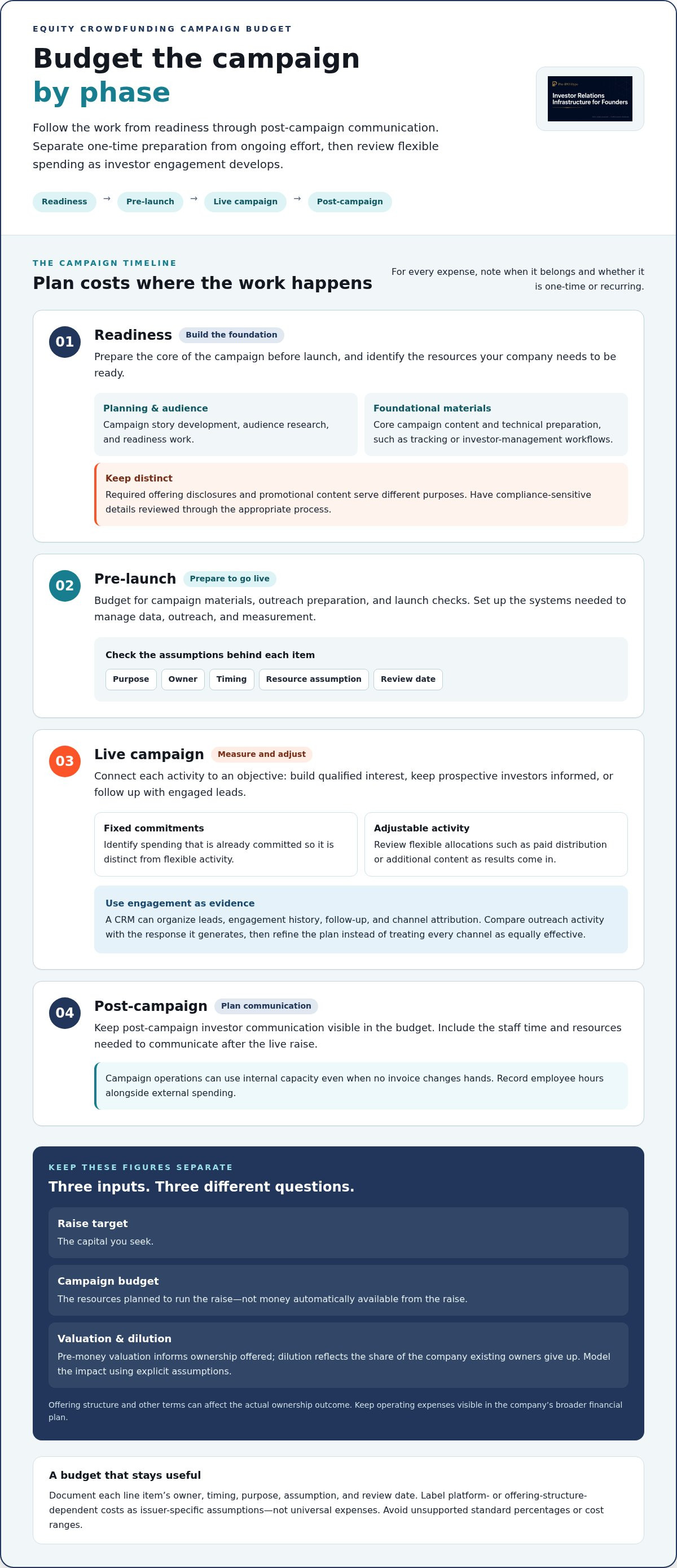
- Group costs by readiness, pre-launch, live campaign, and post-campaign communication to see when each expense belongs.
- Use a line-item worksheet to record each expense’s owner, timing, purpose, assumption, and review date.
- Compare front-loaded and staged spending, then adjust as investor engagement provides evidence about what’s working.
- Keep your raise target, valuation, and potential dilution in view, while using campaign analytics to refine outreach.
What belongs in an equity crowdfunding campaign budget?
An equity crowdfunding campaign budget is the planned capital and internal resources allocated to prepare, launch, promote, and communicate with investors throughout a raise. It’s a planning model tailored to your company, not a universal price list or a promise that a campaign will reach its target. The Equity crowdfunding overview provides broader context on how this form of fundraising works. Your budget turns that context into a practical plan for your company.
Keep three figures distinct: the raise target is the capital you seek, the campaign budget is what you plan to spend to run the raise, and the company valuation is the basis for pricing ownership. The money you hope to raise isn’t automatically available to cover campaign costs, so keep operating expenses visible in the company’s broader financial plan. Include campaign-specific staff time if fundraising work draws on employee capacity.
Which campaign expenses should founders consider?
Build an inventory across these five categories, then mark each line item as one-time or recurring:
- Preparation: campaign planning, readiness work, and foundational materials.
- Platform-related: costs associated with using the selected fundraising platform.
- Compliance: legal, accounting, and financial preparation connected to the offering.
- Marketing: strategy, advertising, content production, and audience outreach.
- Campaign operations: investor communications, monitoring, analytics, and staff time.
Some work happens once, such as developing core campaign content. Other work repeats during the live raise, including monitoring engagement, responding to investor questions, and coordinating outreach. Record internal hours as well as external spending. A line item can consume meaningful resources even when no invoice changes hands.
How does the budget relate to the raise target and valuation?
These inputs inform one another, but they answer different questions. The raise target describes intended proceeds. The campaign budget estimates the resources needed to pursue that raise. Pre-money valuation informs the ownership offered in exchange for investment, while dilution reflects how much of the company existing owners give up.
Model the intended raise and ownership impact using explicit assumptions. In a simplified priced-equity example, compare the amount raised with the post-money valuation, calculated as pre-money valuation plus new capital. The estimate is only as useful as its assumptions. Offering structure and other terms can affect the actual ownership outcome.
Marketing choices should follow the campaign’s goals and audience, not a spend target in isolation. For channel-planning context, explore equity crowdfunding campaign support, including investor relations infrastructure for Regulation CF and Regulation A+ raises, content, and performance tracking.
How to structure an equity crowdfunding campaign budget by phase
A useful equity crowdfunding campaign budget follows the work as it happens. Organize expenses across readiness, pre-launch, the live campaign, and post-campaign communication. This makes it easier to see what must be in place before launch, what continues to consume resources, and what can be adjusted as investor interest develops.
For every line item, record the owner, timing, purpose, assumption, and review date. For example, assign a campaign content item to the marketing lead, schedule it for pre-launch, and state that its purpose is to explain the company’s opportunity to prospective investors. Note how you estimated the resources required and when you’ll reassess the item. Label platform- or offering-structure-dependent costs as issuer-specific assumptions, not universal expenses. Avoid applying standard percentages or cost ranges without current, credible support.
What should the preparation and pre-launch phases cover?
Readiness work can include campaign story development, audience research, core campaign materials, and technical preparation, such as setting up tracking or investor-management workflows. Separate required offering disclosures from promotional content because they serve different purposes. Have compliance-sensitive details reviewed through the appropriate process. If readiness depends on systems for data, outreach, or measurement, include campaign foundation infrastructure in your planning.
How should founders plan live-campaign spending?
Map each live activity to an objective, such as increasing qualified interest, keeping prospective investors informed, or following up with engaged leads. Identify fixed commitments separately from adjustable activity, including paid distribution or additional content. That separation makes it easier to review flexible allocations as results come in.
A Custom Investor CRM can help organize leads, engagement history, follow-up, and channel attribution. That visibility supports more disciplined decisions: compare outreach activity with the response it generates, then refine the plan rather than treating every channel as equally effective. Pre-IPO Hype’s investor relations infrastructure for Regulation CF and Regulation A+ raises, including analytics, connects outreach planning with campaign measurement, without making fundraising outcomes predictable.
- Readiness: story, audience research, foundational content, and systems.
- Pre-launch: campaign materials, outreach preparation, and launch checks.
- Live campaign: investor communication, content, distribution, follow-up, and monitoring.
- Post-campaign: planned investor updates and continued communication.
Use the review date in each line item to decide whether spending remains aligned with its objective. If you’re mapping responsibilities and campaign phases, a campaign planning conversation can help bring the moving parts into focus.
Should you spend the full campaign budget upfront?
No. A larger marketing budget doesn’t guarantee more capital raised. The practical question is how much to commit before launch and how much to hold back until investor response gives you better evidence.
Budget decisions should follow measured engagement, not excitement alone. A strong early signal can create momentum, but it needs context: who engaged, what they did next, and whether your team followed up. Treat the equity crowdfunding campaign budget as a set of decisions to review, not a mandate to spend every planned dollar on day one.
What are the trade-offs of front-loaded versus staged spending?
Front-loading can help you enter launch with campaign assets, audience-building activity, and distribution plans ready. That preparation may support a coordinated debut. The trade-off is committing more resources before you can observe how prospective investors respond to the live campaign.
Staged spending preserves flexibility. You might begin with the materials and outreach needed to launch, then consider additional content or paid distribution after reviewing early engagement. This approach requires active monitoring and timely decisions. It can also slow execution if approvals, creative work, or campaign changes take time. Neither approach fits every issuer. Choose based on readiness, available resources, and how quickly your team can evaluate response.
Which campaign signals can inform a budget adjustment?
Don’t make a decision from a single metric. Review the path from exposure to action, and compare channels using consistent definitions:
- Channel engagement: Are people interacting with campaign content or visiting the offering page?
- Lead quality: Are people showing interest aligned with the intended investor audience, and are they taking meaningful next steps?
- Follow-up activity: Are leads receiving timely, relevant communication, and are they responding?
- Attribution: Which outreach source appears connected to engagement or investment activity?
Attention is not the same as intent. Views, clicks, and email opens can show that a message was seen, but they don’t establish that someone plans to invest. Track those signals separately from direct investor inquiries, follow-up conversations, and completed investment activity. Keep measurement consistent across channels so you’re comparing like with like.
A Custom Investor CRM can organize lead records, engagement history, follow-up, and attribution in one workflow. For more on structuring investor data and tracking engagement, see investor data and engagement tracking. Use the signals to decide whether to maintain, redirect, or pause adjustable activity, while protecting commitments that are already necessary to run the campaign.
How to calculate an equity crowdfunding campaign budget step by step
Turn the campaign plan into a calculation you can explain and update. An equity crowdfunding campaign budget should reflect your company’s actual scope, estimates, and assumptions, not a borrowed industry average. Keep the raise plan and ownership model alongside the budget, but don’t mix them into the expense total.
- Define the raise plan. Record the intended offering structure, target, and expected timeline. These inputs help identify the work and platform-related assumptions that may apply.
- List the work. Map preparation, launch, promotion, investor follow-up, monitoring, and post-campaign communication to specific deliverables.
- Estimate each line item. Assign an owner and timing, then use a relevant vendor estimate or calculate the internal resources your team expects to use.
- State the assumptions. Note what each estimate covers, what it depends on, and what could change it. Mark platform- or offering-specific items clearly.
- Schedule reviews. Set dates to compare actual spending and campaign response with the plan, then document any changes.
Use this worksheet formula: Total planned budget = sum of documented line items + documented contingencies. Include a contingency only when you can explain its basis, such as a defined uncertainty in scope or timing. Don’t add an unexplained buffer just to make the total feel safer.
How do you turn campaign activities into budget line items?
For each activity, record the deliverable, responsible owner, timing, and evidence behind the estimate. For example, a hypothetical campaign might list a set of launch materials, identify the person responsible, and note that the estimate comes from an internal workload assessment. Label this as an assumption, not a typical industry cost. Keep the calculation in your own model, where you can replace estimates with project-specific information as it becomes available.
How should founders review and update the calculation?
At each scheduled review, compare actual spending and investor engagement with your assumptions. Record changes to channels, timing, scope, and remaining campaign resources so the next decision has a clear rationale. If outreach systems and measurement are part of your plan, this guide to investor relations infrastructure for Regulation CF and Regulation A+ raises offers related context on coordinating fundraising tools.
Keep pre-money valuation and dilution in a separate model. They help you assess the relationship between the raise and ownership, but they aren’t campaign expenses. For support turning your assumptions into a coordinated plan, schedule a campaign planning conversation.
Put your equity crowdfunding budget to work with measured investor outreach
A budget creates value when it guides decisions during the campaign, not just when it estimates costs before launch. Connect planned outreach, campaign monitoring, and analytics to specific objectives. Then use observed engagement to decide whether to maintain, adjust, or redirect flexible activity. Measurement won’t predict how much capital you’ll raise, but it can help your team use campaign resources more deliberately.
Pre-IPO Hype provides investor relations infrastructure for Regulation CF and Regulation A+ raises, including a Custom Investor CRM. The CRM can help organize investor leads, track engagement, and support lead scoring and attribution.
How can investor data improve budget decisions?
Lead scoring helps organize follow-up priorities using engagement and other information your team tracks. For instance, a founder can distinguish a lead who has repeatedly engaged with campaign communications from someone who has only encountered an initial message. Attribution can show which channels or interactions are associated with subsequent activity, helping inform future allocation decisions. It indicates a relationship, not proof that a specific channel caused an investment.
Review lead quality, follow-up activity, channel engagement, and completed investment activity together. Don’t treat clicks or views as investor intent on their own. For more on structuring investor information and measurement, explore investor data and engagement tracking.
What should a founder bring to a campaign planning conversation?
Arrive with your fundraising objective and timeline, assumptions about your audience, and the campaign assets already in development. Bring draft budget line items, the estimates behind them, and the engagement measures you plan to review. That gives the discussion a practical starting point: what’s essential for readiness, what can be adjusted, and what evidence will guide decisions as the campaign progresses.
Use the conversation to connect your outreach plan with your measurement goals. Make sure each planned activity has a clear purpose and review point. Discuss your campaign budget and investor outreach to explore how a measured campaign plan can fit your fundraising objectives.
Turn your budget into a campaign operating plan
A strong equity crowdfunding campaign budget is more than a spending estimate. It separates preparation from live-campaign activity, connects each line item to a clear purpose, and gives your team a way to revisit decisions as investor engagement develops. Keep the raise target, campaign expenses, valuation, and dilution distinct so each part of the plan stays clear.
Measured outreach helps turn that plan into action. Pre-IPO Hype’s Custom Investor CRM supports lead scoring and attribution tracking, helping founders organize investor engagement and assess how outreach channels are performing.
Bring your fundraising objective, timeline, audience assumptions, draft budget, and measurement goals into a strategic conversation. Discuss your campaign budget and investor outreach to take the next step with a plan built around your company’s goals and the evidence your campaign generates.
Frequently Asked Questions
What should an equity crowdfunding campaign budget include?
Include the campaign work your company expects to fund, organized by phase and purpose. Planning categories may cover preparation, platform-related expenses, compliance work, content, outreach, campaign monitoring, and investor follow-up. Separate one-time setup from recurring activity, and record the assumptions behind each estimate. Keep campaign spending distinct from ordinary operating costs. Actual needs depend on the issuer, offering structure, platform arrangements, and campaign plan.
How do you calculate an equity crowdfunding campaign budget?
Start by listing the work required to prepare and run the campaign. For each deliverable, record its owner and timing, then estimate its resource needs using your own documented information. Add the line items and note any contingency separately, including why you included it. Schedule regular reviews to compare actual spending and activity with your assumptions. This creates a tailored working budget, but it can’t predict how much investors will contribute.
How much does an equity crowdfunding campaign cost?
There’s no single reliable figure that applies to every campaign. Costs depend on factors such as offering structure, platform arrangements, company readiness, compliance needs, campaign length, and outreach scope. Build your estimate from the work your company plans to do and current project-specific information, rather than relying on generic online averages. Keep service pricing and platform terms distinct, and account for current offering-related requirements in your budget.
Should I include marketing in my equity crowdfunding budget?
Yes, if marketing is part of your campaign plan. Specify the work, such as content creation, audience outreach, distribution, or campaign monitoring, and connect each budget item to an objective. Don’t treat impressions or clicks as capital raised. As the campaign develops, assess engagement, lead quality, follow-up, and investment activity together. Use those signals to consider adjusting planned activity, documenting what changed and the evidence behind your decision.
Is a campaign budget the same as a pre-money valuation?
No. A campaign budget estimates the resources allocated to preparing and promoting a raise. Pre-money valuation estimates the company’s value before new investment. The amount raised and the ownership offered are related financing inputs, but they aren’t campaign expenses. Founders can model these figures together to understand how an offering may affect ownership, while keeping the calculations distinct and reviewing assumptions and offering disclosures carefully.
Can an equity crowdfunding campaign budget change after launch?
Yes. A working budget can be reviewed as campaign needs, timing, and investor engagement evolve. Document why an expense is added, reduced, or redirected, and compare actual activity with the assumptions behind the original plan. Keep compliance-sensitive decisions separate from marketing adjustments. Changes can help align campaign resources with current priorities, but changing spend doesn’t guarantee investor participation or a particular fundraising result.
Disclaimer
Educational only. Not investment, tax, or legal advice. Pre-IPO Hype is investor relations infrastructure for Regulation CF and Regulation A+ raises. We are not a broker-dealer, funding portal, or investment adviser, and we do not offer or sell securities or make investment recommendations. Any securities offering is made only by the issuer, through its own offering documents and, where required, a registered intermediary.


