
How to Build Investor Community Before Your Crowdfunding Launch
An investor community grows before launch through a clear mission, useful updates, and regular opportunities to engage. To understand how to build an investor community before your crowdfunding launch, explain why the company exists, invite customers and supporters to opt in to updates, and communicate consistently as the campaign approaches. Keep the conversation going during and after the raise rather than treating community-building as a one-time promotion.
It’s natural to focus on the campaign page and launch plan. But people need time to understand the business, follow its progress, and decide whether they want to stay involved. A steady, transparent conversation lets interested supporters learn without pressure, whether they become investors, customers, or simply followers of the company’s mission.
This guide explains how to share your purpose, engage customers and supporters, and plan regular updates before launch. It also covers communication during the campaign and afterward. Results vary, and no marketing approach guarantees that a raise will close.
Key Takeaways
- Start building relationships before launch so supporters have time to understand the business and its campaign.
- Make the company’s mission specific and easy to explain, including the problem it addresses and the people it serves.
- Invite customers and fans to stay informed, while recognizing that interest in the company does not necessarily mean someone will invest.
- Plan investor updates for before, during, and after the raise, with clear information about progress and next steps.
1. Build an investor community before launching a crowdfunding campaign
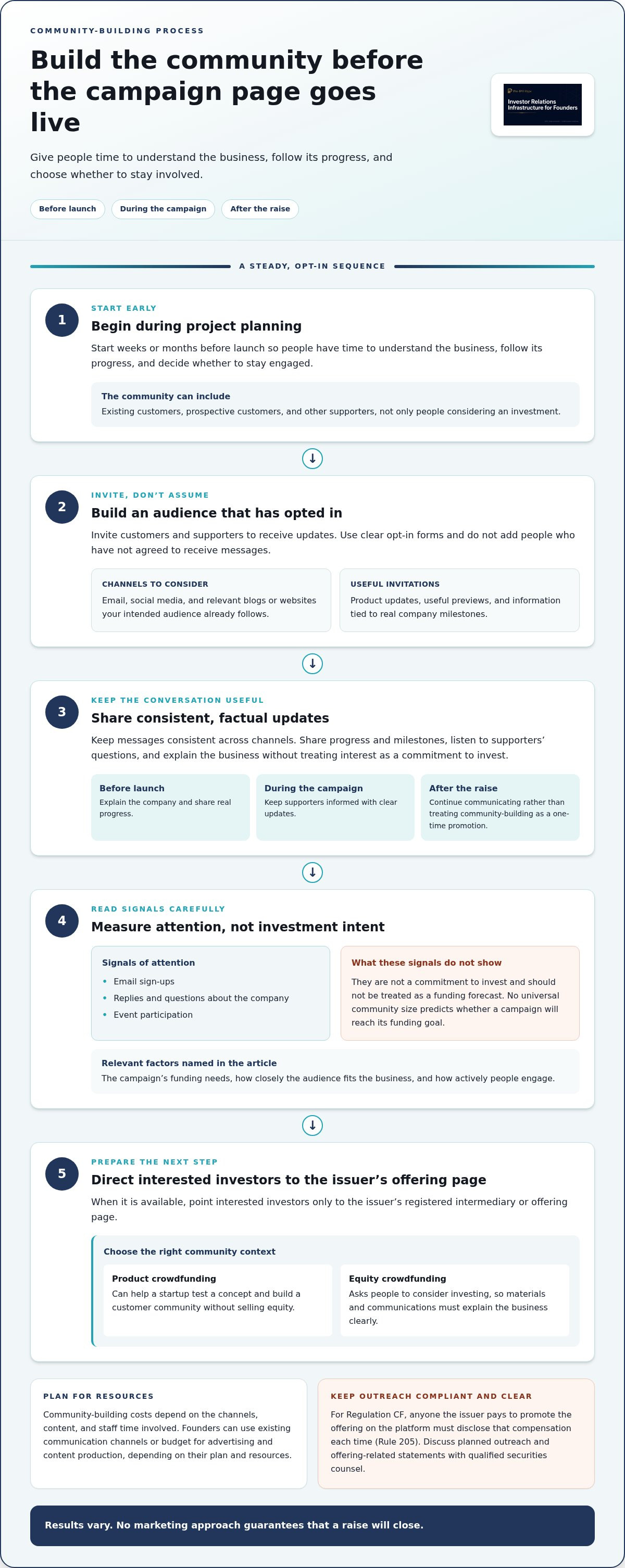
Start before the campaign page goes live. People need time to understand the business, follow its progress, and decide whether to stay engaged. For example, invite existing customers to opt in for product updates, then share milestones that show how the company is developing. An early-adopter community can include prospective customers and supporters, not only people considering an investment.
Crowdfunding platforms vary in their pre-launch tools. Founders can build an opt-in audience through their own email and social channels, then direct interested investors to the issuer’s registered intermediary or offering page when it is available. Choose outreach channels your intended audience already follows, such as email, social media, and relevant blogs or websites. Keep messages useful and consistent across channels.
Begin during project planning, weeks or months before launch, so you have time to explain the company and learn what questions supporters have. Grow an email list with clear opt-in forms, useful previews, and updates tied to real milestones. Don’t add people who haven’t agreed to receive messages. Before launch, send company news to people who opted in. Any mention of the planned raise follows the Rule 206 conditions below.
There is no universal community size that predicts whether a campaign will reach its funding goal. Relevant factors include the campaign’s funding needs, how closely the audience fits the business, and how actively people engage. Measure interest through email sign-ups, replies, event participation, and questions about the company. These signals show attention, not a commitment to invest, so don’t treat them as a funding forecast.
Product and equity crowdfunding serve different needs. Product crowdfunding can help a startup test a concept and build a customer community without selling equity. Equity crowdfunding asks people to consider investing in the company, so its materials and communications must explain the business clearly. Before launch, share information, listen to concerns, and prepare supporters to find the issuer’s offering page.
The cost of building a pre-launch community depends on the channels, content, and staff time involved. Founders can use existing communication channels or budget for advertising and content production, depending on their campaign plan and available resources.
Rules depend on the offering and the communication. For Regulation CF, anyone the issuer pays to promote the offering on the platform must disclose that compensation each time under Rule 205. Discuss planned outreach and campaign materials with qualified securities counsel, especially before making offering-related statements. Common risks include treating followers as investors, sending unsolicited email, overstating demand, and letting updates become inconsistent. Keep outreach done for the issuer factual, opt-in, and consistent with a planned update schedule.
Before the Form C is filed, any message about a possible raise is testing the waters under Rule 206. Each message states three things. No money or other payment is solicited or accepted. No sales happen until the Form C is filed, and only through the intermediary platform. An indication of interest creates no obligation. Written materials get filed with the Form C. After the Form C is filed, messages outside the platform mentioning offering terms are limited to tombstone style notice content under Rule 204, with a link to the offering page. Have securities counsel approve every message about the raise before it goes out.
2. Communicate a clear company mission and purpose
A clear mission gives supporters a reason to follow the company beyond its campaign. Write one sentence that names the problem, the people affected, and the change the business aims to make. For example, a food-waste startup might explain how its service helps local grocers redirect surplus food. Keep the statement grounded in what the company does today and the direction it is working toward.
Connect that purpose to the company’s work. Describe the customer problem, explain how the product or service responds, and share what the business is learning. For instance, a clean-energy company’s founder could explain which energy challenge the product addresses and what evidence shaped its design. Avoid broad claims such as “changing the world” unless you can explain the practical steps behind them.
Use the same core message across the campaign page, founder updates, and conversations with customers. Consistency helps readers understand how each detail relates to the company’s purpose. A simple message framework can keep communications focused: the problem, the company’s approach, the people it serves, and the next milestone. Adapt the examples and detail for each channel without changing the underlying claims.
Show the people behind the business. A founder can share why the problem matters to them, what shaped the company’s approach, and what remains difficult. A specific account of a design decision or customer need gives the mission context without grand language. If the company aims to create social or environmental benefits alongside its business goals, explain those aims separately and describe how its work relates to each.
A clear purpose can attract people who care about the problem, including customers and supporters who may not invest. Make room for their questions. Ask which part of the mission they want to understand, then use recurring questions to improve future explanations. For example, if readers ask how a service helps small businesses, describe the service and its intended users clearly. Don’t treat interest in the mission as a commitment to invest.
Before publishing an offering-related statement, review it for clarity and consistency with the campaign materials. Separate current facts from future goals: “We serve independent retailers” describes the present, while “We aim to reach more regions” describes an ambition. This helps supporters understand the company’s direction without confusing plans with completed results. Qualified securities counsel should review legal decisions and offering communications for a Regulation CF or Regulation A+ raise.
A compelling mission can attract people who identify with its purpose, including potential customers and supporters who may not invest. Keep crowdfunding storytelling clear and mission-driven, and let the people behind the business shine.
3. Engage fans and customers with company updates
Start with people who already understand the company: repeat customers, product users, event attendees, and people who ask detailed questions. Invite them to opt in to company updates, then share clear information about the business and its plans. These signals show interest, not investment intent. Treat each person as an individual, not as a presumed backer.
If you’re considering how to build an investor community before a crowdfunding launch, start with a clear invitation. A customer email might say, “We’re preparing to share more about the company’s next stage. Sign up for updates if you’d like to follow our progress.” Keep that invitation separate from any request to invest. This gives customers a choice and builds a permission-based audience.
Use customer conversations to learn what needs explaining. Ask which product problem matters most, what makes the solution useful, and what questions people have about the company. For example, a founder of a refillable household-products business could ask which packaging concerns influenced a customer’s purchase. Summarize the answers and use them to shape future company updates.
Give supporters practical ways to participate before an offering opens. Invite them to attend a product demonstration, respond to a short survey, or share feedback on a planned feature. Explain the purpose of each activity and how the company will use responses. Participation can deepen understanding, but it doesn’t indicate that someone intends to invest in an equity crowdfunding offering.
When building an investor community before a crowdfunding launch, distinguish customer interest from an individual’s investment decision. Some supporters may want to learn about the offering; others may prefer to remain customers. Direct interested people to the issuer’s registered intermediary or offering page for offering information. Keep campaign outreach on the issuer’s behalf factual and consistent with issuer materials.
Make follow-up personal without making it intrusive. If a customer asks about the company’s plans, answer directly and offer an opt-in channel for further updates. If a supporter attends a demonstration, send a brief recap with the next relevant company milestone. Avoid repeated unsolicited messages and respect requests to stop receiving communications.
A simple engagement record can help founders manage conversations. Track each person’s opt-in status, preferred channel, questions, and promised follow-up. Review the notes before sending a message so it addresses real interests rather than assumptions. This supports clear communication while leaving each person free to decide whether to learn more or invest.
4. Communicate regularly before, during and after the raise
Keep sharing useful updates after people first express interest. Set an editorial calendar tied to company milestones, such as completing a product test, adding a distribution channel, or responding to customer feedback. Each message should explain what changed, why it matters, and what the company is working on next. This gives readers a reason to keep following the company’s progress.
Choose a cadence the team can sustain. A founder might send a monthly email, then add a brief update when a meaningful milestone occurs. The exact rhythm matters less than meeting expectations. If an update is delayed, explain the change rather than leaving readers guessing. Keep a shared calendar so the founder and communications team know what is planned.
During a campaign, distinguish company news from offering information. A product update could describe a completed test and its implications for the business. Offering details should remain consistent with the issuer’s materials and be directed to the issuer’s registered intermediary or offering page. Ask qualified securities counsel to review legal decisions and offering communications.
Make each update easy to scan. Start with the main development, add context, then state the next step. For example, a startup testing a new service could report what customers found useful, describe a change the team made, and explain what it plans to evaluate next. Avoid vague claims about progress. Concrete details help readers understand what the company has achieved and what remains underway.
Invite questions and respond through a consistent channel. If several readers ask how a product works, address the question in a future update. If an investor asks about an offering detail, provide accurate information through the appropriate issuer channel. Track unanswered questions and assign an owner so follow-up doesn’t depend on memory or scattered inboxes.
Continue communicating after the raise. Share relevant business developments with investors, including progress, challenges, and changes in priorities. If a milestone takes longer than expected, explain why and what the company is doing next. Don’t imply that a delay has been resolved until it has. Clear reporting helps maintain an informed relationship beyond the campaign.
Before sending each update, confirm its facts, remove unsupported promises, and make the next step clear. A simple record of sent messages and responses helps the team identify unanswered questions and plan future communication. Results vary, and no marketing approach guarantees that a raise will close.
A useful follow-up process makes communication an ongoing practice rather than a one-time campaign task. Crowdfunding issuers should keep investors informed after the raise. Keep the tone informative and make it easy for investors to understand how to stay connected. Before sending, ensure the message serves a clear purpose and fits the established cadence. Consistency can help sustain attention and give investors a reason to follow the company’s progress.
Pre-IPO Hype: Custom Investor CRM
Pre-IPO Hype provides investor relations infrastructure for Regulation CF and Regulation A+ raises. We are not a broker-dealer, funding portal, or investment adviser, and we do not offer, sell or recommend securities. This article is educational only and is not legal, tax or investment advice. Pre-IPO Hype fees are never tied to investment results. FWSC and Pre-IPO Hype are paid per form filled out and per meeting booked, with no commission, equity or share of the raise.
For founders organizing community communications, Pre-IPO Hype provides campaign support alongside the issuer’s registered intermediary and qualified securities counsel. The Investor Relations OS includes pipeline CRM, outreach automation, and analytics. Its tools can help organize engagement and show which communications prompt responses, while founders continue sharing accurate, consistent updates.
Consider Pre-IPO Hype when planning outreach for the issuer or coordinating investor relations around a raise. Explore the Investor Relations OS to put your investor communications and engagement data in one system.
Make community communication part of the company’s operating rhythm
Make investor communication a shared responsibility, not a task that appears only when a raise is approaching. Assign an owner for each message, agree on who reviews company claims, and keep a record of decisions that affect what supporters hear. This creates a reliable process as the business changes.
Founders planning how to build an investor community before a crowdfunding launch can establish this communication process before campaign preparation becomes urgent. Set a regular review point to consider what has changed, what supporters may need explained, and whether planned messages remain accurate.
Pre-IPO Hype provides investor relations infrastructure for Regulation CF and Regulation A+ raises. We are not a broker-dealer, funding portal, or investment adviser, and we do not offer, sell or recommend securities. This article is educational only and is not legal, tax or investment advice. Pre-IPO Hype fees are never tied to investment results. FWSC and Pre-IPO Hype are paid per form filled out and per meeting booked, with no commission, equity or share of the raise.
Pre-IPO Hype provides campaign support alongside the issuer’s registered intermediary and qualified securities counsel. Explore the Investor Relations OS to see how its pipeline CRM, outreach automation, and analytics can support your communications process.
Build the process with care, ground it in the company’s real progress, and let trust grow through consistent communication.
Frequently Asked Questions
What content and updates help build trust with prospective crowdfunding investors?
Share verifiable company information, including product demonstrations, team responsibilities, customer feedback used with permission, and progress against stated business milestones. Explain what has changed since the last update and correct errors openly. For example, if a product test reveals a limitation, describe what the company learned and how it is responding rather than presenting only favorable results. Keep offering-related statements consistent with issuer materials, and have qualified securities counsel review legal decisions and communications.
Which crowdfunding platforms allow pre-launch investor community building?
Platform tools vary. Founders can build an opt-in audience through their own email and social channels, then direct interested investors to the issuer’s registered intermediary or offering page when it is available.
Disclaimer
Educational only. Not investment, tax, or legal advice. Pre-IPO Hype is investor relations infrastructure for Regulation CF and Regulation A+ raises. We are not a broker-dealer, funding portal, or investment adviser, and we do not offer or sell securities or make investment recommendations. Any securities offering is made only by the issuer, through its own offering documents and, where required, a registered intermediary.


