
How to Raise a Seed Round in 2026: A Founder’s Step-by-Step Guide
What if a seed round is won before you make the ask? Learning how to raise a seed round starts with more than a sharp pitch: investors need a credible case for your company, a clear plan for the capital, and a reason to believe you can execute. If you’re unsure whether you’re ready, how much to raise, or how to reach the right investors, you’re asking the questions that shape a stronger process.
The goal isn’t to send your deck to everyone and hope momentum follows. It’s to build conviction step by step, with a defensible fundraising target, focused investor outreach, and consistent follow-up. This guide shows you how to assess readiness, prepare the materials investors expect, and organize a pipeline of aligned prospects. It also explains how a CRM can help you manage relationships and track engagement.
You’ll also get a practical view of round structure and timing, from the first conversation through diligence, documentation, and closing. The details depend on your company and financing, so treat legal and securities matters as topics to work through with qualified counsel, not as one-size-fits-all rules. By the end, you’ll have a clearer plan for moving from initial interest to a well-managed seed-round close.
Key Takeaways
- Assess whether your startup is ready by identifying the next meaningful milestone and what progress would demonstrate.
- Learn how to raise a seed round with a target grounded in planned spending, available resources, and the runway needed to reach that milestone.
- Build an investor thesis around stage, sector, check-size fit, investment history, and expertise to focus your outreach.
- Turn meetings, follow-ups, and diligence into a coordinated process by recording next steps and keeping materials accurate and organized.
- Understand the key considerations for completing a seed-round close and maintaining clear investor and company records afterward.
What Is a Seed Round and When Is Your Startup Ready?
A seed round is early-stage capital a startup raises to reach its next meaningful growth milestones. Those milestones might include completing a product, proving that customers will pay, or building the team needed to expand. The label describes a stage of company development, not a universal check size or a rigid point on a fundraising timeline.
Seed money generally refers to early funding that helps a business develop its idea and establish a foundation. A seed round may follow bootstrapping, which uses founders’ own resources or revenue, or come after pre-seed funding used to test an idea or build an initial product. Later institutional rounds typically support companies with more established evidence and larger growth plans. In practice, labels and structures vary by company and investor.
For another perspective on how investors may think about seed-stage valuation, watch this video from Underscore VC:
Seed-round readiness: Your company has credible evidence of a real opportunity, clear goals for the next phase, and a reasoned plan for how capital will help achieve them. Readiness is about the case you can make, not simply the round label or the activity of other startups.
What does seed funding typically help a startup achieve?
Start with the milestone, then connect the funding plan to the work required to reach it. Depending on your model and stage, that could mean developing a product, acquiring customers, or hiring for a capability the team lacks. Define what progress looks like in observable terms, such as shipping a product feature or demonstrating repeat customer use. The right milestones depend on your business and what current evidence supports.
Raising because peers are fundraising is not a strategy. A milestone-based plan shows why the capital matters and what it is meant to unlock.
How can founders assess whether they’re ready to raise?
Take an honest inventory before shaping the investor narrative. Review customer evidence, product progress, market rationale, team capability, and financial visibility. Separate what you’ve validated, such as paid usage or repeated customer feedback, from assumptions that still need testing. Gaps aren’t automatic deal-breakers, but you should understand them and be ready to explain how you’ll address them.
Fundraising also demands a coordinated approach to investor relationships. Explore this overview of our investor relations infrastructure for Regulation CF and Regulation A+ raises to see how organized outreach and campaign tracking can support the process. Knowing how to raise a seed round begins with a defensible story: what you’ve learned, what comes next, and why funding now can move the company forward.
Build a Seed-Round Strategy Before You Start Investor Outreach
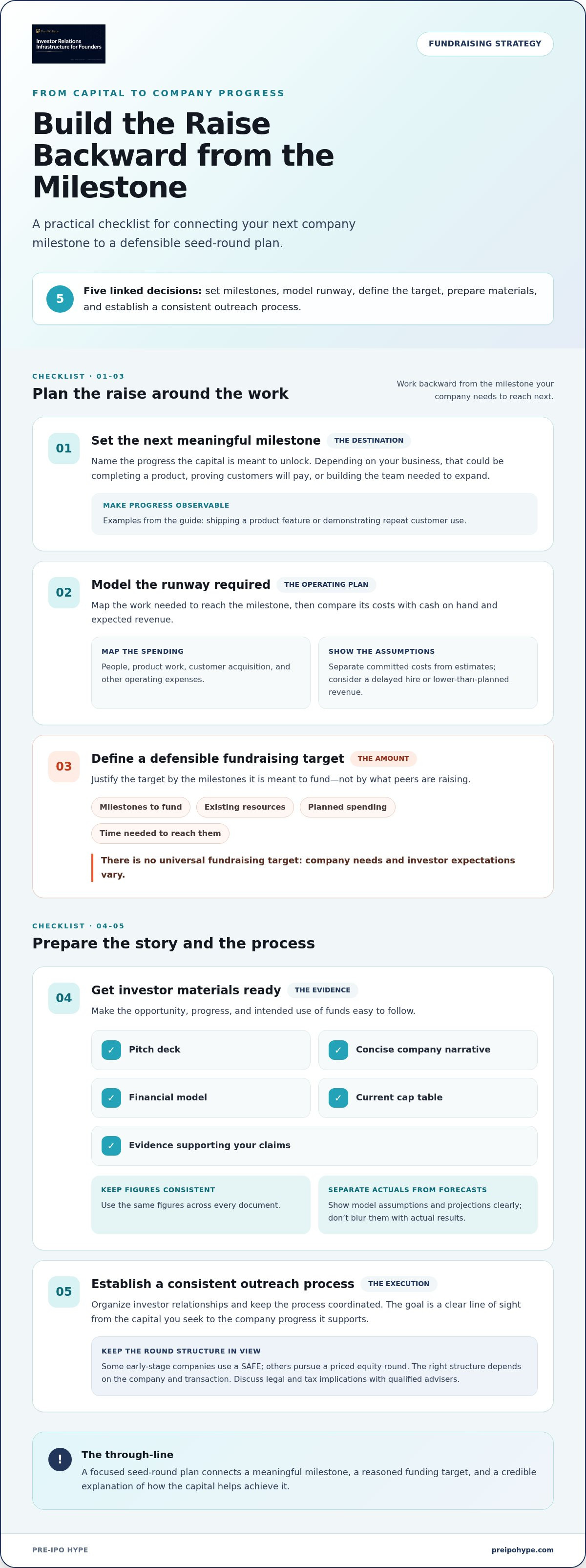
A focused raise starts with an operating plan, not a list of investors. Before you begin learning how to raise a seed round, connect five decisions: set the milestones, model runway, define a target, prepare materials, and establish a consistent outreach process. That sequence gives investors a clear line of sight from capital to company progress.
A fundraising target should be justified by the milestones it is intended to fund. It should also account for existing resources, planned spending, and the time needed to reach those milestones. There’s no universal target that fits every startup: company needs and investor expectations vary.
How should a founder set a fundraising target and runway plan?
Work backward from the next milestone. Map the people, product work, customer acquisition, and other operating expenses required to get there, then compare that plan with cash on hand and expected revenue. A product company might connect its target to completing development and testing with early customers; another business may prioritize hiring or proving a repeatable sales process.
Make assumptions visible. Separate committed costs from estimates, and model what happens if a key hire takes longer or revenue comes in below plan. This shows how long the company can operate under different conditions and whether the planned raise supports a credible next step, rather than an arbitrary amount. Y Combinator’s guide to seed fundraising offers another founder-focused perspective on preparing for a raise.
Which materials should be ready before the first investor meeting?
Prepare a pitch deck, a concise company narrative, a financial model, a current cap table, and evidence supporting your claims. The narrative should make the opportunity, progress, and intended use of funds easy to follow. Use the model to show assumptions and projections, not to blur forecasts with actual results. Keep figures consistent across every document.
Financing structures can also shape the process. Some early-stage companies use a SAFE, while others pursue a priced equity round. The right structure depends on the company and transaction; discuss legal and tax implications with qualified advisers rather than treating a general guide as professional advice.
Strong operations help keep materials and investor information organized. Explore this fundraising infrastructure guide for ways to support a coordinated process. If you want to pressure-test your milestones and preparation plan, you can discuss your fundraising strategy with a consultant.
Find the Right Seed Investors and Make Your Pitch Relevant
A strong investor pipeline is built on fit, not volume. Define your investor thesis before compiling names: what stage and sectors align with your company, what check sizes suit the round, which investors have backed comparable businesses, and what expertise could be relevant? Public investment theses and portfolio patterns can help you prioritize, but they’re signals, not guarantees of a fixed mandate or future interest.
Warm introductions can open doors, but they’re one route, not a prerequisite. A concise, relevant direct message can earn a conversation when it explains why you chose that investor and why the opportunity fits their interests. Keep track of the reason for each approach and the next step, rather than sending the same pitch to every contact.
| Investor type | Potential fit | Relationship approach | Founder considerations |
|---|---|---|---|
| Angel investors | Early-stage companies seeking individual backers or relevant operator experience | Use founder, operator, and professional networks; personalize direct outreach | Investment focus and involvement vary by person |
| Seed funds | Companies aligned with a fund’s stage, sector, and investment approach | Review portfolio and public thesis; seek an introduction or send a tailored pitch | Fit, process, and decision timelines differ across funds |
| Strategic investors | Companies where industry knowledge or business relationships may add value | Lead with the relevant strategic opportunity and shared interests | Consider strategic fit alongside the terms and relationship implications |
| Community-based routes | Founders with an engaged customer or supporter community | Communicate the opportunity through appropriate community channels | Plan for clear, consistent communication and an organized process |
How do you build a focused investor list?
Start with evidence, not a sprawling spreadsheet. For each prospect, record the fit rationale, relevant investments, potential introduction paths, outreach status, and next action. A structured pipeline helps you compare prospects and maintain thoughtful follow-up. Pre-IPO Hype’s Custom Investor CRM helps founders organize investor relationships, score leads, and track engagement across outreach channels.
What should a seed-round pitch communicate?
Make the customer problem, solution, market logic, traction evidence, team, and funding milestones easy to grasp. Adjust the emphasis to the investor’s expertise, but keep core facts consistent across meetings. Distinguish verified results from projections, and be candid about what remains unproven.
Make the use of funds concrete: “This capital will fund product development and customer testing to reach a defined launch milestone.” That connection between the ask and measurable progress is central to how to raise a seed round with a focused, credible story.
Run Investor Outreach, Diligence, and Follow-Up as One Process
A compelling deck can earn attention, but it won’t secure a commitment on its own. Investor fit, timely follow-up, credible answers, and reliable execution all shape the process. Treat each conversation as part of one coordinated workflow, not a series of disconnected pitches.
Set a simple cadence: personalize the first message, hold the meeting, record what you learned, send relevant follow-up, and update materials when new information changes the story. A clear process helps the team respond consistently and spot where investor interest is building or stalling.
How should founders manage investor conversations and follow-ups?
After each interaction, log the contact’s context and interests, meeting outcomes, open questions, and agreed next steps. Follow up with the specific information requested or a meaningful company update, not a generic check-in that adds no value. Pre-IPO Hype’s Custom Investor CRM supports lead scoring, omnichannel outreach, and attribution tracking, helping teams keep relationship details and engagement visible. Keep records current so outreach can be coordinated and engagement patterns reviewed.
Investor communications should feel consistent across channels. Our investor relations infrastructure for Regulation CF and Regulation A+ raises helps keep messaging and outreach aligned as conversations progress.
What happens during seed-round diligence and closing?
Diligence is reciprocal evaluation. Investors may examine customer evidence, financial information, the team, product progress, and company documentation. Founders should also assess whether an investor’s expectations, expertise, and working style fit the company. Keep supporting records accurate and organized, answer questions promptly, and flag when a response requires more time rather than letting a request go unanswered.
As discussions advance, the parties may work through investment terms, instruments, and closing documents. The details depend on the transaction, so qualified legal and tax advisers should guide those decisions and any related filings. Marketing support does not replace professional securities or legal advice.
That discipline is central to how to raise a seed round: a strong pitch opens the door, while consistent communication and careful execution help move a conversation toward a decision. To discuss organizing investor outreach and follow-up, schedule a fundraising strategy conversation.
Close the Seed Round: Turn the Raise Into the Next Milestone
A signed agreement is an important step, but the round isn’t complete until the agreed documents and funding steps are finished. Coordinate closing details with qualified legal and tax advisers, confirm funds are received as expected, and keep executed documents and company records organized. Careful administration now gives the team a reliable foundation for what comes next.
What should founders do immediately after closing?
Return to the operating plan that supported the raise. Reconcile the funds received against the plan, assign an owner to each priority, and translate broad goals into milestones the team can track. If the plan calls for product development and customer growth, define what progress looks like, who is accountable, and when the team will review results.
Then compare actual performance with the assumptions behind the raise. Are costs tracking as expected? Is customer demand developing as projected? Where results differ, investigate early and adjust the operating plan rather than letting a variance become a surprise. Keep committed investors informed with clear updates tied to material progress, key decisions, and challenges. Choose a cadence the team can sustain and keep company and investor records accurate.
How can founders make investor outreach more systematic?
Investor outreach doesn’t end when a round closes. Organized relationship records can help founders maintain context for existing investors and build a more disciplined approach to future outreach. A custom investor CRM can centralize contact details, interactions, and next steps; engagement tracking can help a team understand which communications prompt a response. Coordinated campaigns and content strategy can support consistent investor communications, while consulting can help founders refine their fundraising process.
Pre-IPO Hype provides investor relations infrastructure for Regulation CF and Regulation A+ raises, including a Custom Investor CRM, campaign analytics, content strategy, and consulting for fundraising. These capabilities support investor relationship management and outreach, but they don’t replace legal, tax, or securities counsel.
The strongest close is a launch point, not a finish line. Put the capital to work against the milestones you presented, communicate progress clearly, and let real operating evidence inform the next chapter. To discuss a more systematic investor outreach process, book a 30-minute fundraising strategy conversation.
Turn Your Fundraising Plan Into Forward Momentum
Knowing how to raise a seed round means building investor conviction through a connected process: define the milestones your capital will fund, focus outreach on aligned investors, and manage conversations with consistent follow-up. Once the round closes, turn that plan into clear operating priorities and track progress against the assumptions you shared.
Investor relationships need the same discipline after the raise. Accurate records, thoughtful updates, and organized outreach help founders maintain momentum as the company works toward its next milestone. Pre-IPO Hype’s Custom Investor CRM supports lead scoring, omnichannel outreach, and attribution tracking.
To refine your investor outreach process, book a 30-minute fundraising strategy conversation. A clear plan, a focused pipeline, and steady execution can help you move forward with confidence.
Frequently Asked Questions
What is a seed round?
A seed round is an early-stage financing round that gives a startup capital to pursue defined growth milestones. Those milestones might include developing a product, testing customer demand, or building the team. The term doesn’t prescribe one universal company stage, fundraising amount, or financing structure. Founders should be ready to explain what the capital will enable, how they’ll use it, and why the planned milestones matter to the company’s next phase.
How do I know if my startup is ready to raise a seed round?
Readiness depends on evidence and a credible plan, not simply on having a pitch deck. Can you explain the customer problem, show meaningful product or business progress, and connect funding to specific milestones? Be prepared to discuss your finances and company ownership, too. Gaps don’t automatically mean you shouldn’t raise, but identifying them early helps you sharpen your timing, address weak points, and have more grounded investor conversations.
How long does it take to raise a seed round?
There’s no reliable universal timeline for raising a seed round. Preparation, investor fit, existing relationships, diligence, and the financing structure can all affect the process. Plan for more than investor meetings: allow time to prepare materials, follow up, answer questions, and complete closing steps. Avoid building your runway plan around an assumed quick close. Model timing scenarios and keep a clear view of operating needs as conversations progress.
Do founders need warm introductions to raise a seed round?
No. A warm introduction can provide useful context, but it’s not the only way to start an investor conversation. Research investors and their publicly visible interests, then send concise outreach explaining why your company may fit. A focused list, relevant evidence, and thoughtful follow-up are more useful than sending the same generic pitch to a large group. Keep each message accurate and respectful of the investor’s stated interests.
What should a seed-round pitch deck include?
A seed-round deck commonly covers the customer problem, product or solution, market opportunity, business model, traction or validation, team, competition, and use of funds. The emphasis should reflect your company and the investor, while the underlying facts stay consistent across conversations and materials. Support claims with evidence and clearly label projections. A deck can open a discussion, but it doesn’t replace a credible operating plan or organized information for investor diligence.
Can a startup raise a seed round through a SAFE or convertible note?
Yes, some startups use SAFEs or convertible notes, while others raise through priced equity rounds. The appropriate structure depends on the company, investors, transaction, and applicable rules, so there’s no universal answer. Before issuing or accepting securities, have qualified legal and tax professionals explain the terms, documentation, and potential consequences. General fundraising information can help you prepare questions, but it isn’t a substitute for advice tailored to your situation.
How should founders track seed-round investor outreach?
Keep a reliable record of each investor’s potential fit, contact history, meeting notes, open questions, and agreed next steps. A CRM can help coordinate follow-ups and organize engagement across outreach channels, so the team can act on context instead of relying on memory. Use it to support good judgment, not replace it. Keep messages relevant, accurate, and respectful, and make sure records are updated as investor conversations develop.
Disclaimer
Educational only. Not investment, tax, or legal advice. Pre-IPO Hype is investor relations infrastructure for Regulation CF and Regulation A+ raises. We are not a broker-dealer, funding portal, or investment adviser, and we do not offer or sell securities or make investment recommendations. Any securities offering is made only by the issuer, through its own offering documents and, where required, a registered intermediary.


